

Open the page
Click Merchants in the left sidebar. The header reads “Merchants” with the line “Manage your merchants.” underneath. The button at the top right opens the profile editor: it reads Edit Merchant once you have saved a profile, and Create Merchant before that.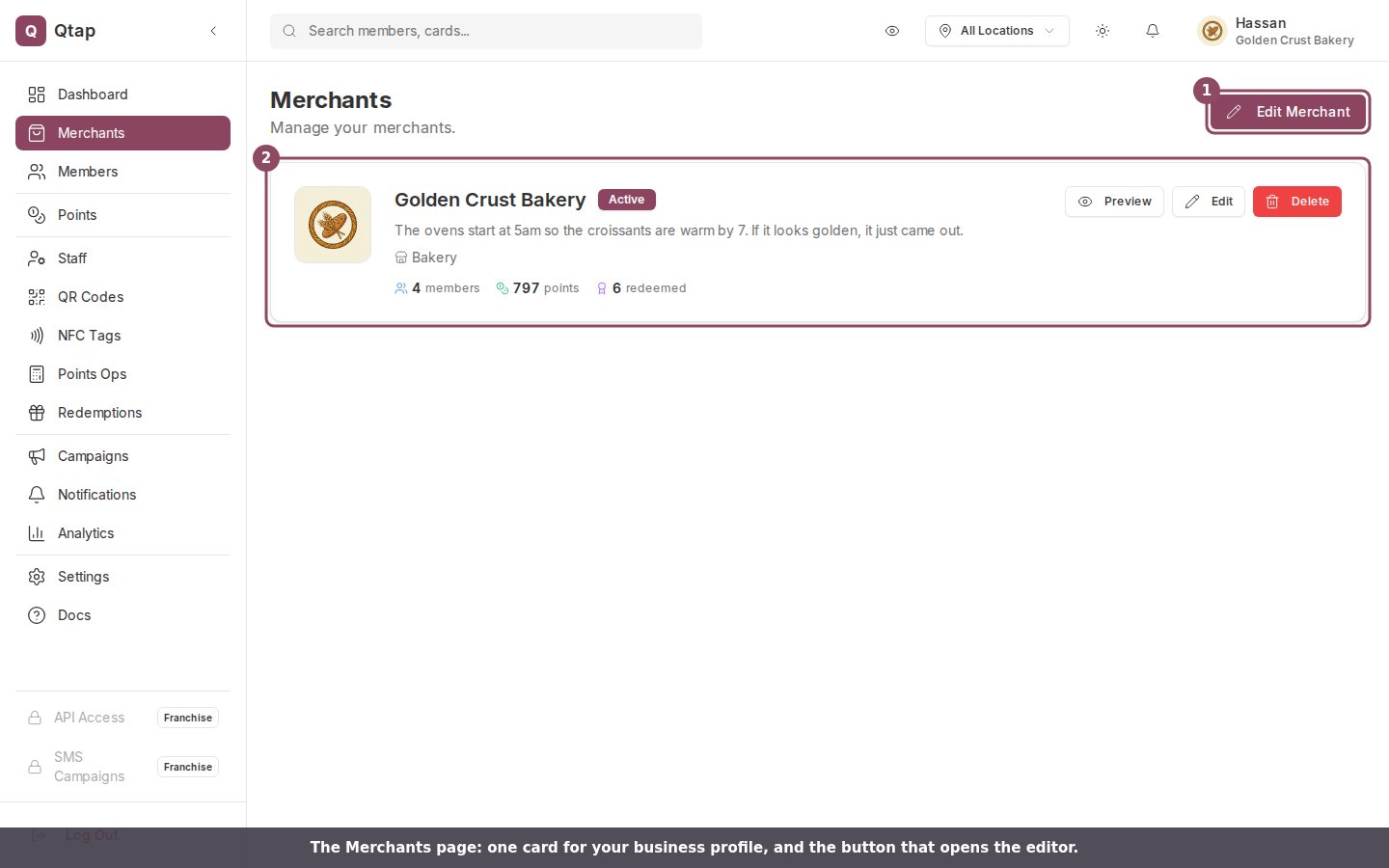
The Merchants page. The button at the top right (1) opens the editor, and your profile card (2) sits below it.
What the card shows

The profile card: logo, name and badge, description, and category.
- Your logo. A dashed square shows here instead if you have not uploaded one.
- Your business name, with an Active badge beside it.
- Your description, trimmed to two lines.
- Your category, followed by whichever location name, phone number, website address and Google rating you saved.
The Active badge is fixed text. It appears whenever a profile exists, and it does not tell you whether your loyalty cards or campaigns are running.
The running totals
Under the details is a row of totals summed across your current members. They are not limited to a date range, so they will not match a report you filtered to last month. They also drop when you permanently delete a member, because deletion removes that member’s stamp, point and redemption history from the sum. Treat them as totals for the members you have now, not for the whole life of the account.
Running totals: members (1), points or stamps earned (2), and rewards redeemed (3).

The same row on a stamp card account, counting stamps instead of points.
Preview, edit and delete
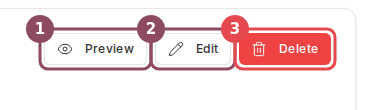
The three buttons on the card: Preview (1), Edit (2) and Delete (3).
- Preview opens your public page in a new tab, showing the profile as it stands now. This button only appears once your page has a web address saved.
- Edit opens the profile editor, the same screen the Edit Merchant button at the top opens.
- Delete asks you to confirm before it removes anything.
Deleting your profile
Delete opens a confirmation box titled “Delete Merchant”. Nothing happens until you confirm.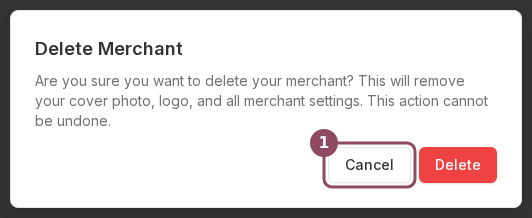
The delete confirmation. Cancel (1) backs out and leaves your profile alone.
Before you set up a profile
Until you save one, you see a short empty state in place of the card, reading “No merchant yet” with a Create Merchant button that opens the editor. See Building your merchant page for the fields you fill in there, and What customers see on your public page for the result.Who can open this page
Only the owner. Managers and staff do not see Merchants in the sidebar at all. A manager can still edit the business profile from the editor itself: no link in the dashboard points there for them, so they go todashboard.qtap.qa/merchant-page directly in the browser. That lets you hand the profile work over without giving anyone owner access. See Roles and permissions for what each role reaches.